Queen Elizabeth II was only twenty-five years old when she became queen of seven commonwealth countries, including the United Kingdom, Canada, Australia, New Zealand, South Africa, Pakistan, and Ceylon (known as Sri Lanka today). She was a notable queen not only because she holds the record for the longest-serving English monarch but also because she reigned during political troubles in Northern Ireland, devolution in the United Kingdom, the decolonization of Africa, and the United Kingdom’s accession to the European Communities and withdrawal from the European Union.
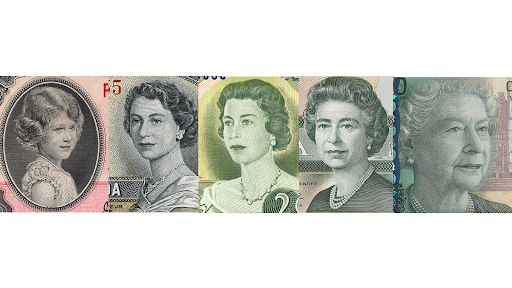
Queen Elizabeth II also holds the record for the monarch with the most portraits on currency worldwide. Her face has been featured in thirty-three countries and is currently used by over fifteen countries, with the most populated being Australia, the United Kingdom, Canada, and New Zealand. The following timeline depicts the recently deceased Queen’s aging portraits on banknotes.
1935
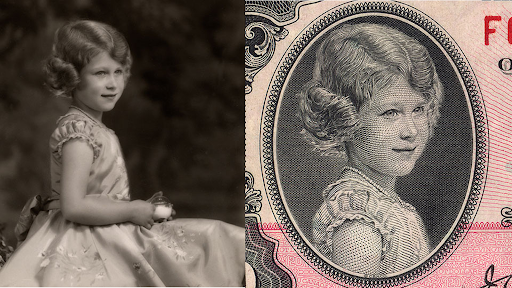
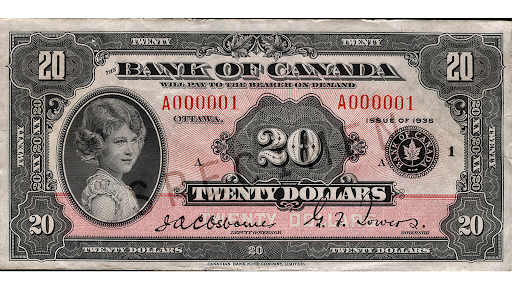
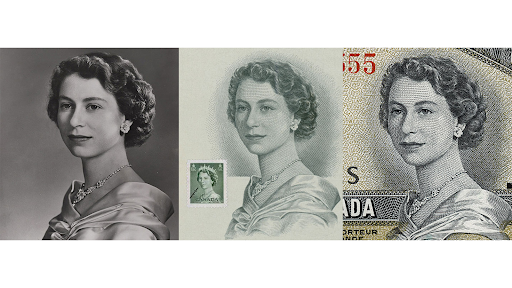
Long before Queen Elizabeth acceded to the throne, a $20 banknote featuring her portrait as an eight-year-old was issued in Canada. Princess Elizabeth, the granddaughter of King George V, was a part of the inaugural banknote series issued in 1935. The bank note’s engraving was based on a candid photograph taken by the royal photographer Marcus Adams.
1954
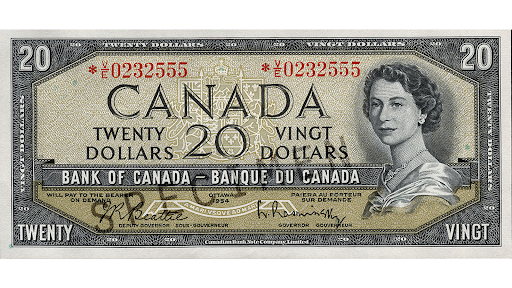
In the 1954 Canadian Landscape Series, the Queen’s likeness is featured on every denomination of notes. To reflect Canada’s culture and nationalism, the Canadian coat of arms appears on the front, alongside the Queen, with decorative Victorian-style flourishes.
1960 – 1961
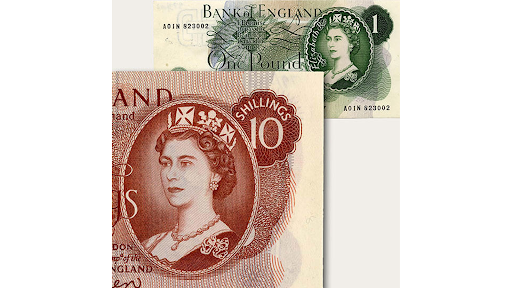
The first time that Queen Elizabeth appears on a Bank of England note is on the £1 issued in 1960. The same young portrait of the Queen was issued on the ten shilling note in 1961. Robert Austin designed the banknotes and notably featured her wearing the Diamond Diadem, a crown first made for King George IV in 1820.
1960s
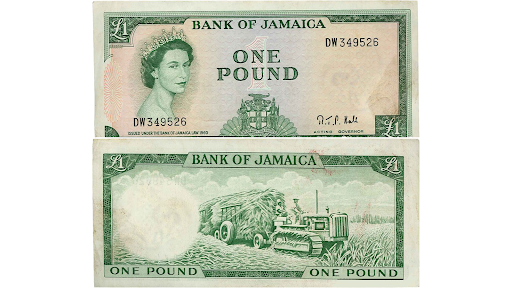
The 1-pound Jamaican note shows a young portrait of the Queen and a harvesting scene. It wasn’t until 1962 that Jamaica became independent but remained under the British commonwealth.
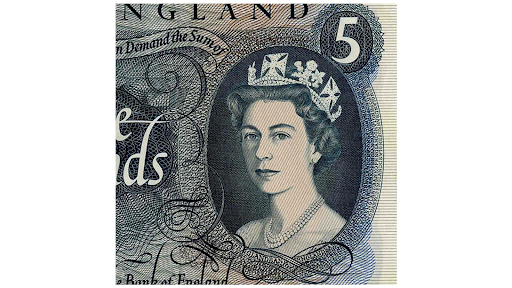
1963 – 1964
The Bank of England issued the new £5 and £10 notes which featured a new, slightly aged, and relaxed portrait by Reynolds Stone.
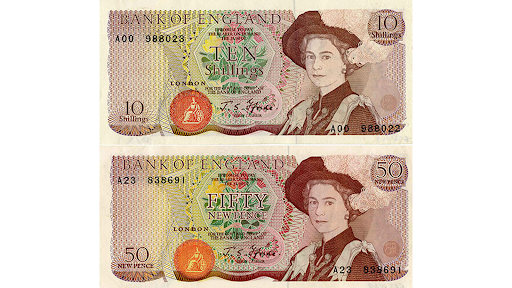
1967
The Bank of England proposed to include a new ten-shilling note with the Queen wearing a hat and robes of the Order of the Garter. The robes display the most senior order of knighthood and the image and arms of Saint George, England’s patron saint, worn only during ceremonial occasions.
However, British currency changed from pounds, pence, and shillings to a decimal system of one-hundred pennies in the pound. The proposed ten shilling note was changed to a fifty pence note but was ultimately rejected as a fifty pence coin was created instead.
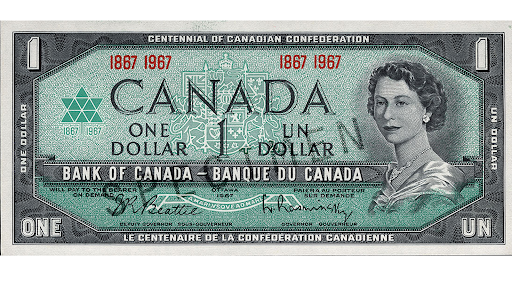
1967
The Bank of Canada issued a commemorative note symbolizing 100 years of Confederation in Canada which depicted the Queen. This is the first portrait of the Queen to appear on a commemorative note.
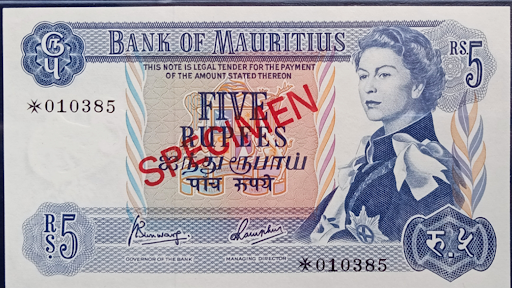
1967-1982
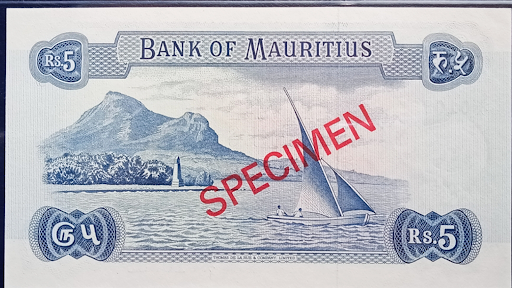
A five rupee note was created for the Bank of Mauritius featuring the Queen, a sailboat, Montagne du Lion, and a monument to the first Dutch landing in 1598. Notably, the watermark for this banknote is the extinct Dodo bird.
1969-1979
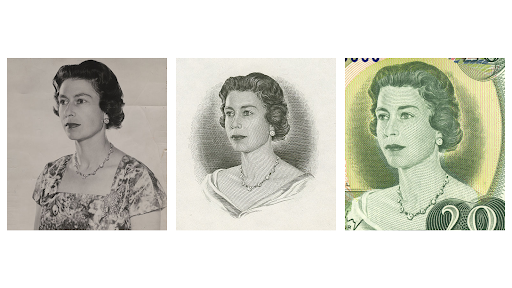
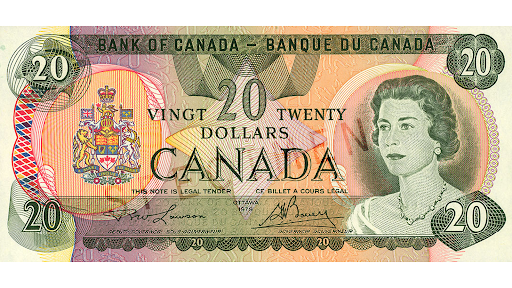
For the series Scenes of Canada, the Queen’s image appears on the $20, $2, and $1 notes issued before the $1 loonie coin in 1987. The Queen’s attire is less formal, but she is wearing diamonds gifted by the people of South Africa in 1947. The diamonds were kept in the final portrait, but the dress was made to appear more traditional in the final image.
1970s
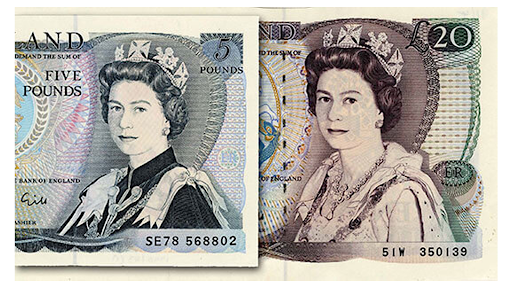
Two portraits of the Queen were featured on the £1 and £5 notes, each where the Queen is wearing ceremonial robes. The new portraits symbolized the formality and tradition of the country and the Queen. Compared with the first portraits of the Queen, her cheeks appear slightly rounder, which implies that she is aging although graceful.
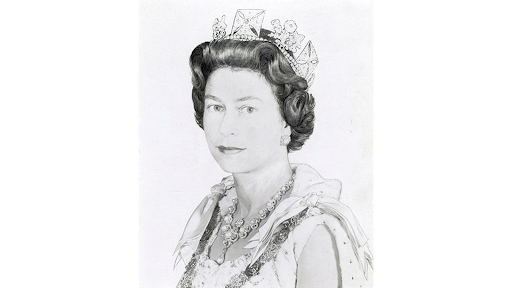
For higher sum notes of £10, £20, and £50, the Queen’s portrait shows her wearing the Diamond Diadem, the State Robes, and the collar of The Order of The Garter. These robes are traditionally worn for the State Opening of Parliament.
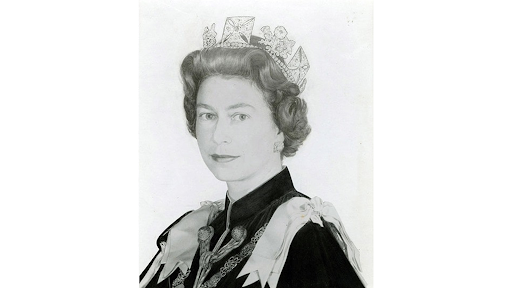
For notes with a low sum of £5 and £1, a second portrait is shown of the Queen wearing the dark blue robes of The Order of The Garter.
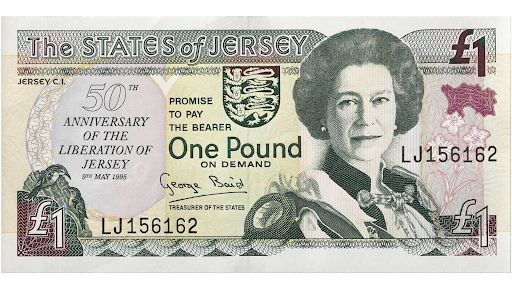
1976-1988
A one-pound note was created to celebrate the 50th anniversary of the liberation of the States of Jersey from the Nazis, with the first aging portrait of the Queen, who was fifty-two at the time of the release.
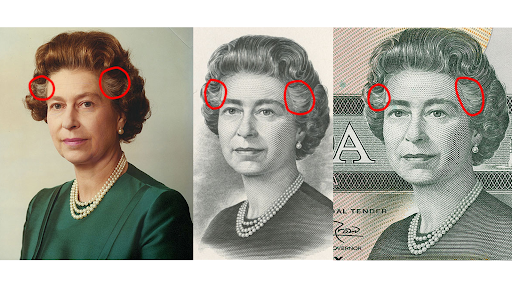
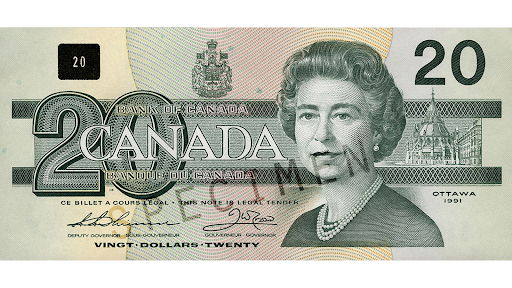
1986
A new portrait was displayed from a photograph taken by photographer Anthony Buckley. On the Birds of Canada Series bank note, the portrait appears on the $2, $20, and $1,000 notes. In the portrait, the Queen is wearing a string of pearls given by her grandfather, King George V. The most notable feature is the Queen’s slightly graying hair on the edges of her face.
1990
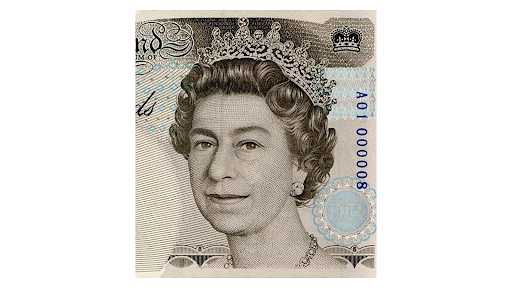
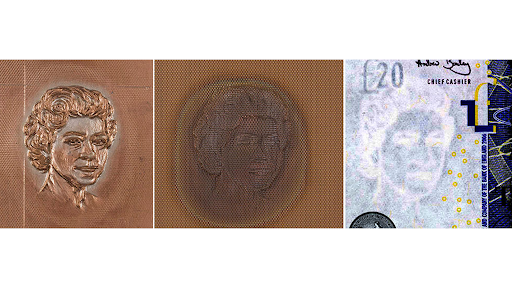
The £5 note featured a new mature portrait of the Queen, who was sixty-four when it was issued. A watermark was also created but without elaborate jewelry.
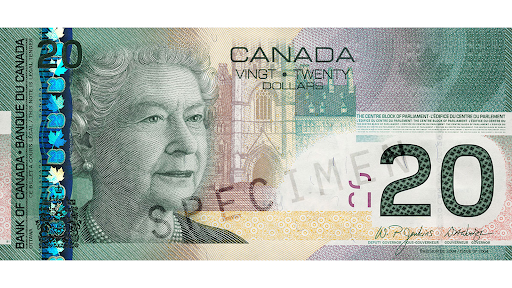
2006
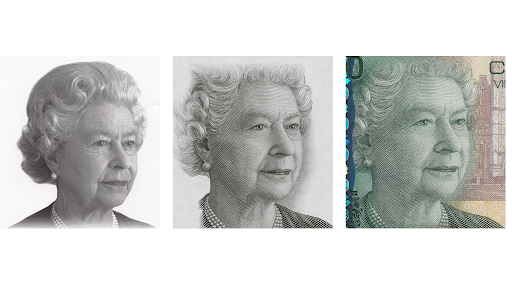
The Canadian Bank commissioned a new portrait of the Queen for the Canadian Journey series notes. This is the first portrait on any currency where the Queen is shown looking to the right and with an aged face.
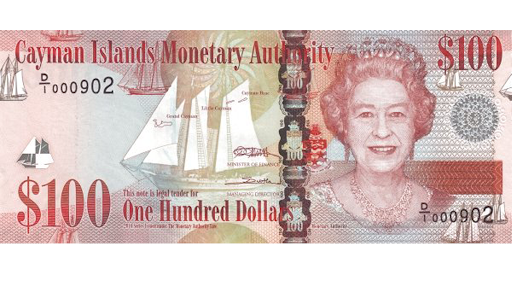
2010-2018
The Cayman Islands, one of the British Overseas Territories, created a $100 banknote displaying a prominent smiling portrait of the Queen in an aged state.
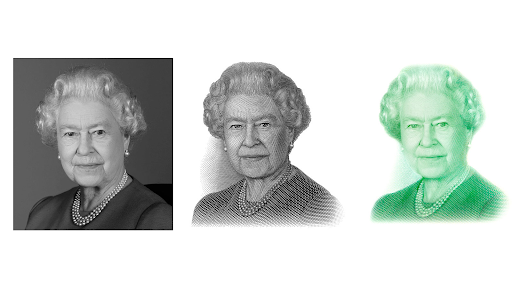
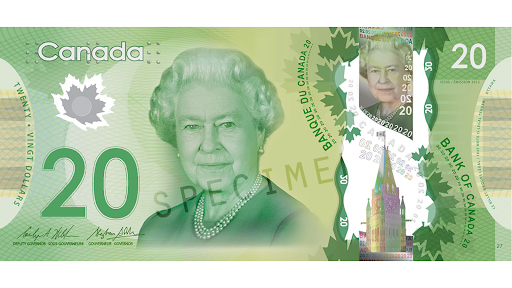
2011-2013
A part of the Canadian Frontiers series, the $20 note features a well-aged portrait of the Queen, a drastic comparison to the bank notes from the Bank of England during this period. The portrait is based on a photograph taken in 2009 by royal photographer Ian Jones. Interestingly, a metallic portrait of the original colorized image appears on the note in the top right corner. The image was meant to serve as a new security measure in holographic form, making it difficult to counterfeit.
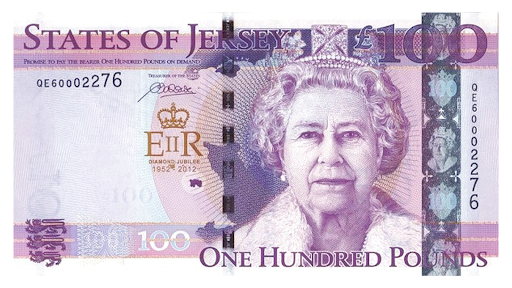
2012
Arguably the most mature-looking banknote portrait of the queen is depicted on this one hundred pound note from the States of Jersey marking the Diamond Jubilee. When the portrait was created, the queen was seventy-eight years old.
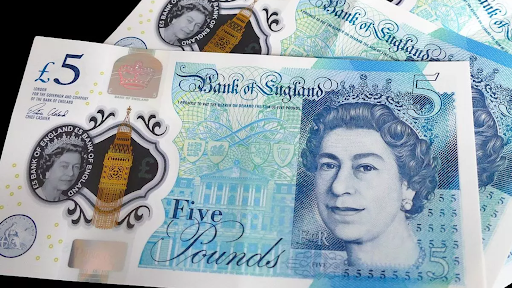
2016-2022
The portraits used on banknotes from 2016 to the Queen’s death in 2022 are the same mature image featured in 1990. However, the watermark used on these notes is more aged than those from the 1990s. Another difference is that the watermark shows the queen wearing a crown.
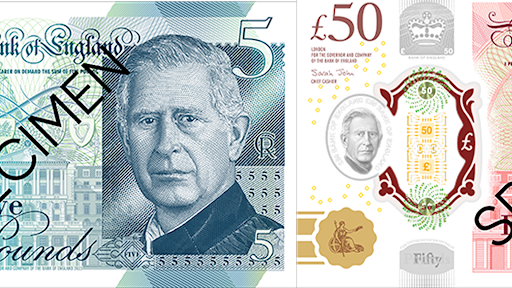
2022
While Queen Elizabeth II has passed, her portrait is still one of the most recognized images in the world. The Bank of England and many commonwealth countries are beginning to feature King Charles II on their currency instead of the queen. The banknotes of the Queen and King will co-circulate until the Queen’s notes are phased out.